BADGERS BACK IN COURT

C1/2018/2332 The Queen on the application of Langton -v- The Secretary of State for the Environment Food and Rural Affairs & Anr. Appeal of Claimant from the order of Sir Ross Cranston, dated 15th August 2018.

Before

  • THE LORD CHIEF JUSTICE OF ENGLAND & WALES and
  • LORD JUSTICE SINGH and
  • LADY JUSTICE NICOLA DAVIES

Tuesday, 2nd July, 2019

At half-past 10

Tomorrow, Tuesday 2nd July, the Court of Appeal will consider whether the decision a year ago by a High Court judge to dismiss challenges to major elements of Defra and Natural England’s approach to badger culling in 2017 was right. Defra’s controversial policy that year to kill more badgers for longer, to prevent the English Bovine TB cattle disease crisis will come under fresh legal scrutiny, as will impacts on the ecological interest of nature sites of international significance.

The Court of Appeal will consider whether Sir Ross Cranston, sitting as a High Court judge in July 2018, wrongly dismissed the legal challenges brought by claimant ecologist Tom Langton against two elements of badger culling. These were namely, the decision of the Secretary of State for the Environment Food and Rural Affairs (SSEFRA) to pursue a policy of ‘supplementary culling’ of badgers, and the decisions of Natural England (NE) to issue licences in 2017 for badger culling affecting internationally important nature conservation sites in Devon, Dorset, Somerset, Cheshire and Wiltshire.

Breach of Protection of Badgers Act 1992

Mr Langton’s challenge against the SSEFRA’s pursuit of supplementary culling exposes that government has cut both costs and corners in considering the scientific evidence for its new approach to shooting badgers, introduced by Defra in 2017.

The claim is that the Government has approved a method that has no scientific basis and that has been advised against by published studies suggesting that the approach might even be counter-productive in the fight against bovine TB. This was also pointed out by the Zoological Society of London experts after the suggested method was made public.

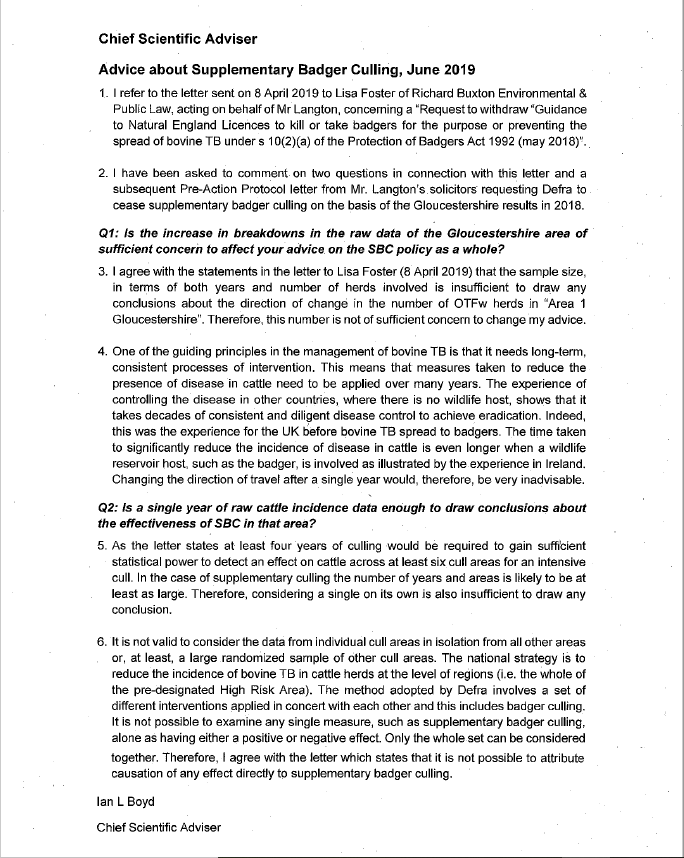
The Protection of Badgers Act 1992 may be breached if culling is done merely on an experimental basis to stop spread of disease when there is no robust scientific evidence or certainty that this will work. The Government’s actions were found to be lawful by Sir Ross Cranston on the basis that the government argued it was able to adapt to and learn from any findings once the method is adopted. In recent weeks the Chief Scientific Advisor and Chief Veterinary Officer and a Natural England scientist have denied that a spike in bTB in the Gloucestershire pilot study and a slight rise in the Somerset pilot area in 2018 indicate that the method may be making things worse.

Important Nature Sites at Risk

On the second Ground of Appeal, Mr Langton’s challenge against Natural England centres around the duty on NE under UK and European law to ascertain that internationally important nature conservation sites are not adversely affected by badger culling operations. In the case before Sir Ross Cranston, Mr Langton had claimed that NE’s assessments pursuant to this duty were cursory and inadequate and as a consequence the decisions to sanction badger culling made on the back of them were unlawful.

In the High Court in July 2018, Justice Cranston agreed with Mr Langton that NE had breached certain of its duties under the Habitats Regulations. However, he accepted NE’s case that correction of the errors in their assessments would make ‘no difference’ to their conclusions and consequently he did not quash the badger culling licences.

The Court of Appeal will decide whether he was right not to do so. The Court will also decide whether he was correct to accept various measures to limit the possibility of impacts on international sites. One example was that culling stand-off zones near known high tide roosts for wading birds (which were imposed as conditions on the culling licences) were not ‘mitigation’ and could therefore be relied upon to ‘screen out’ sites from more detailed consideration. This is an approach that has since been found to be unlawful under European law.

Government has cut both costs and corners

Campaigners state that government has failed completely on the scientific monitoring that is required for any safe and proper assessment of new methods to shoot badgers, introduced in 2017.

Corners have been cut because;

  1. Badger numbers are crudely guess-estimated and not properly assessed as is essential in determining population sizes; a vital consideration.
  2. Natural England backtracked  on requiring data from cull companies on fox and other predator control numbers in and around cull areas.
  3. Natural England claimed to the court that their staff would know if any negative effects were happening on protected sites while at the same time stating in public that their ability to monitor SSSIs was seriously diminished.

ClaimantTom Langton said:

 ‘’ The understanding that badger culling may now be making things worse rather than better or having no effect at all is quite sobering and I hope the government will take time to reflect. What they should have realised in 2017 when they went ahead, was that they had no ability at all to learn from what was being proposed. It was and remains a huge mistake.

Our wildlife sites have been threatened by Natural England whose job it is to protect them. We think that Natural England’s defence is wrong and a damning indictment of their capacity and abilities. The court has found that they have breached their duties and now they are trying to justify, with dismissive language, feeble safeguards that neglect responsible protection of nature.

More badgers have been killed and injured during the year since the first hearing. The Minister should now intervene and take urgent steps, beginning with cancelling this year’s supplementary badger culls in order to rethink the policy. Claims by senior politicians that culls are working are founded upon briefings by Defra officials, based on mistaken or overstated understanding of the scientific evidence.’’

Habitat Regulations expert Dominic Woodfield said:

“Natural England earnestly reassured Justice Cranston last year that they will instantly respond to any emerging evidence of impacts on sensitive bird populations and other features, including those underpinning internationally important wildlife sites. These reassurances have been shown to be baseless platitudes.

One cannot respond to evidence of a negative effect that one is not looking for. The reality is that Natural England has conducted next to no routine monitoring of species populations on the European Sites threatened by badger culling, and is therefore not in any position to use any such monitoring as a miner’s canary to signal when protective steps ought to be taken.

It is telling that in the time they bought by reassuring the High Court last year, Natural England has sought to overhaul its impact assessments in a manner that precisely vindicates Mr Langton’s original claims, and as a consequence they now claim that quashing any 2017 decisions would be academic.

It will be for the Court of Appeal to decide whether this really is an academic matter having regard to all the changes to procedure and conditions that have been forced by Mr Langton’s challenges and whether those changes, welcome as they are, go far enough to protect vulnerable wildlife and fulfill our international obligations.”

Badger Culling – just 5 days to Court of Appeal Hearing

Next Tuesday July 2nd at last sees  aspects of Supplementary Badger Culling and Habitat Regulations Assessment  of badger culling under review by the Court of Appeal, nearly a year since the cases were first heard in the High Court. We are hopeful that further scrutiny will finally show the full merits of our arguments.

This time there are three Judges. There are parts of last year’s submissions to work through and  new supporting submissions.  So far the case is listed for one day but the exact timing, court number and judges are yet to be revealed.

The Hearing will be televised:

https://www.judiciary.uk/you-and-the-judiciary/going-to-court/court-of-appeal-home/the-court-of-appeal-civil-division-live-streaming-of-court-hearings/

From submissions made by Defra and Natural England for these appeals, and from other exchanges of correspondence it is clear that the intention is to continue to increase badger culling this year and beyond. Yet despite monitoring the general trend in bTB in each cull area, senior  government sources also confirm this week that there will be no absolute indication of whether badger culling is contributing to bTB control or not.

The arguments put forward by government show intent to continue badger culling long into the future. This despite the fact that bTB was tackled effectively, with a 80% decline over four years in the 1960s. Shockingly, their justification still references badger killing in the Republic of Ireland, where no relationship between badger removals and bTB change has ever been established. The claims from government scientists are frankly astonishing.

Government intends to continue culling badgers until bTB is eradicated from cattle, but even any theoretical benefit from badger culling cannot materialise until the disease is rigorously addressed in cattle. Put another way, even if badger cull could help reduce bTB slightly, it cannot while disease in cattle is inadequately addressed by failing testing.  This was actually known from the start. Killing badgers has always been pointless, with no meaningful contribution.

It is obvious from the ‘Godfray Review’ in 2018 that the scientists actually know that badger culling is not a significant component of the policy, and indeed has no little or no value in bTB control. This was one message at this week’s  meeting ‘Tackling Bovine TB’ at  the TB Advisory Service Conference in Cirencester, while others preferred sticking to the doomed government line. Effective cattle bTB testing, movement control and strict biosecurity are the measures that will deliver significant bTB disease control benefit.

We can only hope that the writing is on the wall now for the expensive, cruel, useless badger cull and that precious public resources will be directed to where they can be effective in the future.

Fundraising income to help fund legal costs for these appeals has been a steady trickle, and all who have so generously contributed cannot be thanked enough.  The need remains to continue to challenge bad badger culling policy and bTB control. Several decisions to be taken on the way forward are dependent on the outcome of the appeals, but it is not clear exactly how long any new judgement will take.

Supplementary culling goes full-steam ahead

Yesterday in the House of Commons, Stephen Lloyd, Independent MP for  Eastbourne said the following: “Given the extended roll-out, it is estimated that about 150,000 badgers will have been culled by the end of 2020. This animal, which has been around since the ice age, faces extinction in various parts of the country.”

Given that 67,000 badgers have already been killed since 2013, presumably we  can expect around 83,000 more to be killed before the end of next year. And what is being used to justify all this culling? Well there’s the much quoted Brunton et al. 2017 paper, whose statistical modelling produced a theoretical benefit in Tb reduction, along with the less quoted caveat ‘’it would be unwise to use these findings to develop generalizable inferences about the effectiveness of the policy at present.”

And now apparently there is another computer modelling paper Downs et al, currently waiting for publication. This too, apparently, will show a theoretical benefit in Tb reduction in Gloucestershire and Somerset. This will come as a surprise to those looking at the actual number of new herd breakdowns, and seeing a huge spike in Gloucestershire in 2018.

Will  ‘Downs 2019’ heavily adjust too and caveat in the small print? These adjustments are made in an attempt to nullify factors other than badger culling which have not been ‘controlled’ for on the ground. How could they have been controlled? This is not a scientific experiment, it’s an industry led culling exercise, and no amount of adjustments will be able to give a conclusive ‘cause and effect’ result.

So how will  anyone be able to say badger culling has worked or not? Simple truth is they will not. The result is that there is no ‘off’ button – Plan A  is to cull forever. New herd breakdowns could go down, stay the same, or go up (as they have in Gloucestershire) and government could go on claiming a need for badger culling, which they will continue to endorse.

Please help up to fight badger culling with legal action. Without a change in government, we believe it is the only way to seek a change in this shocking policy.


Natural England keep supplementary culling, despite Gloucestershire bTB spike

Yesterday was a surprising day. In the morning lawyers for the claimant received a letter from Natural England, here, saying they had not yet decided whether to re-authorise the supplementary badger cull licenses in 2019. They claimed that “the representations made in your letter regarding the effectiveness of supplementary culling may be considered by the decision maker in the context of the re-authorisation decision.” They said that “ judicial review is therefore premature and we invite you to await our further correspondence on this issue.”

We didn’t have long to wait. Just a few hours later, we received a letter from Defra with news that the cull licenses had been authorised, coming into effect immediately with letters of authorisation from Natural England placed on the Defra web pages dated 12th June. Word from the field comes that pre-cull activities started earlier in the week so when was the decision to issue actually made?

At the bottom of their letter Natural England said “…Natural England does not accept the allegation in your letter that it acts “under dictation” from DEFRA.”

Events suggest that the first letter was written at the same time the decision to issue the licences was made. What should we make of these two letters? Does it look like two separate hands on the wheel?

This morning a response was made by the Government Legal Department to the claimant’s pre-action letter regarding a request for supplementary badger culling to be suspended. More on this later.


Supplementary culling licences – update

Hours after receiving this letter from Natural England, comes  a letter from Defra saying that the supplementary culling licences have been authorised in Gloucestershire and Somerset.

So it appears that the challenge to the supplementary culling licences was not premature after all?

What is going on at Natural England?  

Natural England’s new authorisations allow the killing of up to 540 badgers in Gloucestershire Pilot Area 1 and 578 in Somerset Pilot Area 2.

Supplentary culling licences

Yesterday the claimants legal team received an email from Natural England’s solicitor in response to the pre-action letter. The letter says that Natural England have not yet made a decision on whether to re-authorise the supplementary badger cull licences for Areas 1 and 2  (Gloucs and Somerset) in 2019. Presumably the same applies to Area 3. (Dorset) which has had 4 years of culling and is now a candidate for supplementary culling. NE says that ‘’representations made in your letter regarding the effectiveness of supplementary culling may be considered by the decision maker in the context of the re-authorisation decision.”

This doesn’t sound like much of a concession yet, but at least Natural England are actively considering new information and evidence. NE know that their licensing decisions are being carefully scrutinised, and they know that the science is uncertain.

Please help to continue the calls for more openness on environmental information, data and the decision-making processes of badger cull licensing, and to highlight the lack of evidence for the policy as a whole.

Donate

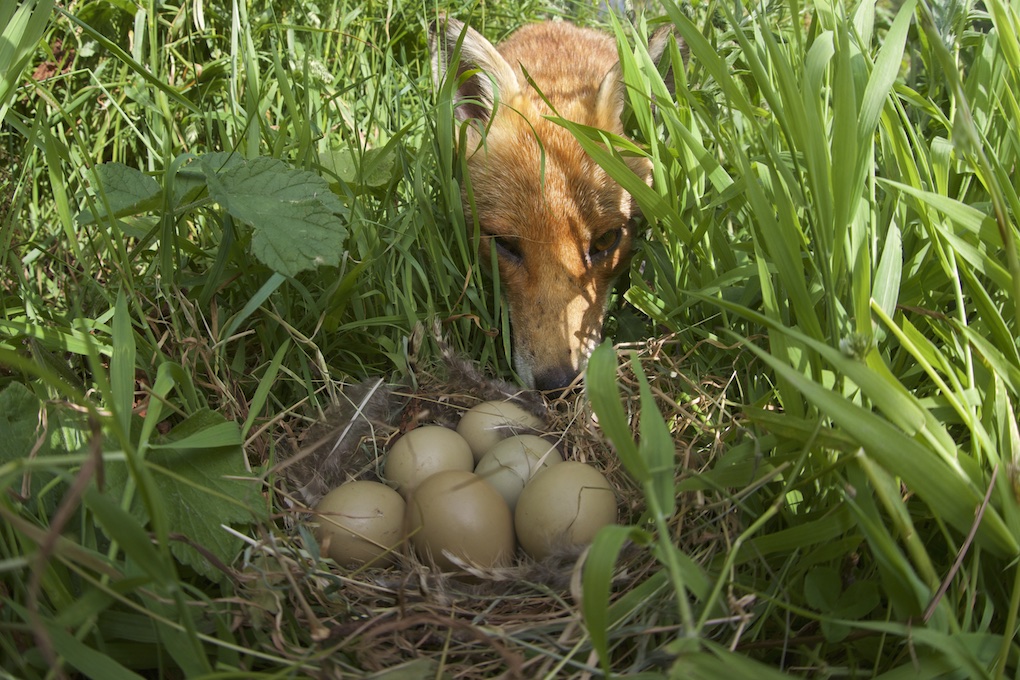
Does the badger cull spell trouble for ground-nesting birds?

The Ends Report has put out a further piece by James Fairs here, on Natural England’s licensing of the badger cull and the risk that ‘carnivore release effects’ from removing badgers could have a clear-cut or subtle, yet profound damaging impact on our countryside. Last year during a Judicial Review hearing into whether adequate assessments had been done into the ecological impacts of badger culling, Natural England made repeated assurances to a High Court Judge that their ‘routine monitoring’ would detect any effects of badger culling on important protected ecosystems, and that they would respond to any changes identified. There remains no clarity surrounding what is being monitored,  nor how the integrity of any monitoring can be guaranteed. 

Culling has been underway for six years in the pilot cull areas and data released by the Government last summer indicated that in fact 47% of Sites of Special Scientific Interest have not been examined by NE in accordance with their own monitoring protocols within the last six years. This is the reality of the ‘routine monitoring’ referred to. A report commissioned by Natural England last year which compares coarse datasets of breeding bird records collected by volunteers continues to be suppressed.  

This last ditch scrabble to cover the legal loopholes while keeping an awkward public funded report secret is surely a stark humiliation for our statutory agency.

We despair at the weak and woolly response of Natural England in merely trying to find fox control data, rather than implement full and proper monitoring of at-risk rural ecosystems in their entirety. This is what is essential  to ensure the protection of our best wildlife sites, given such a drastic and large-scale intervention as badger culling. We call on the government to halt all badger culling immediately and to launch an inquiry into the oversights.

Full text is available on our ‘Press Cuttings’ page.

Press Release

A new pre-action letter has been sent to Defra and Natural England over ‘supplementary’ badger culling


Key Points

  • A pre-action protocol letter has been sent to the S/S for Food, Environment & Rural Affairs and Natural England over the governments refusal to stop supplementary badger culling.
  • ‘Confirmed’ bovine TB cattle herd breakdowns have risen in Gloucestershire and Somerset after one year of supplementary culling.

  • New calls for a halt to supplementary culling in Gloucestershire and Somerset, and for Dorset not to start this year.

  • Four weeks to go until the Court of Appeal re-examines a previous (2018) case challenging supplementary culling policy.  

There is mounting public scepticism over the science and justifications behind mass culling of badgers in England. Badger culling has increased steadily since 2013 as a part of the Government’s attempt to control the livestock disease bovine tuberculosis (bTB).

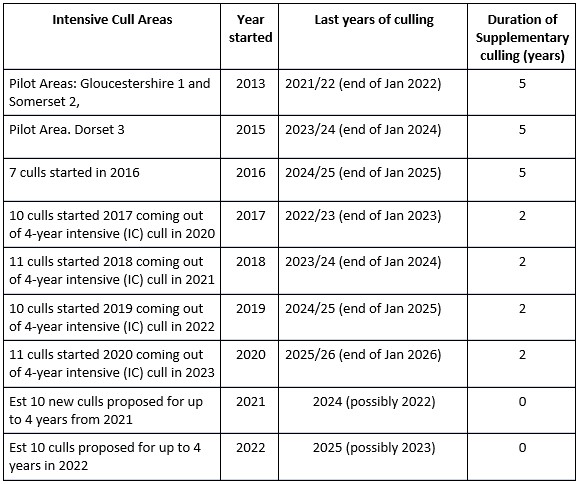
Supplementary culling is the killing of badgers for a further five years or more once four years of intensive culling have been completed.

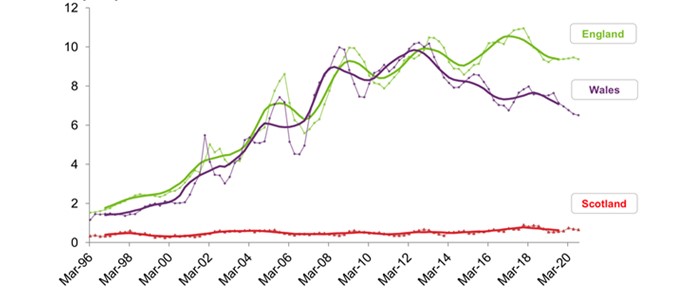
Recent correspondence with the government and Natural England follows release of data on 8 April showing that ‘confirmed New Herd Breakdowns’ (NHBs) have risen since the 2017 implementation of Supplementary Culling in the Gloucestershire and Somerset cull areas. Confirmed NHB’s in Gloucestershire jumped from 10 to 23 cases.

Following release of the data, the claimant is taking further action against the government to stop the issue of supplementary cull licences and has written to DEFRA and Natural England to formally request that DEFRA withdraw the Supplementary Culling Guidance and NE revoke licenses issued under the supplementary cull policy. A response is expected in a week. Further legal proceedings may follow.

In any event, the Court of Appeal will hear a case brought by Tom Langton in 2018 scheduled for 2/3 July  which asks the Court to quash the supplementary cull policy guidance, issued in 2017. The hearing will also address other questions which have emerged over safeguards on protected nature sites from culling. The principal argument in the guidance case is that government lacked the necessary evidence and safeguards to justify the supplementary cull policy. The recent data on NHB confirms that supplementary culling is not associated with any bTB decline benefits and could well be contributing to policy and licensing failure.

Mr Langton, an ecologist who has worked on studies of wild animal diseases, is challenging alleged breaches of the Protection of Badgers Act 1992 by the government. In particular, he is challenging claims made by the Chief Scientific Officer Prof Ian Boyd that badger culling with an experimental approach could be a learning process, despite senior scientists and expert organisations in 2017 advising that such an approach might be counterproductive. He said:

‘’The government has indicated that it can adapt its policy on badger culling as further evidence becomes available. However, it is well established that it is not possible to definitively identify the source of bTB in cattle herds breakdowns, except in cases where a new strain of bTB has been imported through cattle trading or neighbour contact.

In truth, the badger culling policy is a policy with no stop button, and where there is no possibility of learning, just a direction to continue killing badgers forever, even if measures are not working. This repeats the mistakes made in The Republic of Ireland where badger killing for decades cannot be linked to any changes in disease levels.

The English bTB emergency requires crisis management as the current cattle testing regimes and movement controls are clearly failing.  The Supplementary Culling policy is a road to no-where. Killing for the sake of killing. There is no potential for linking cause to effect, no scientific learning, and for that reason the policy is unlawful. It cannot show, as is required, that it is preventing the spread of disease.’’

FURTHER INFORMATION

In consultations held for the badger killing policy in 2011, Natural England appeared to indicate that badger culling was unlikely to contribute to disease reduction if other bTB control measures in cattle were not working. This consultation wording has since been redacted and is now kept secret.

Natural England’s new Chairman, environmentalist Tony Juniper is faced with a dilemma. Is he prepared to license the updated policy, that was initially introduced by former (2009-2013) NE Chairman and dairy farmer Poul Christensen?  He has to decide over the next few days and weeks whether to agree to support an acceleration of badger killing by around 25% to 40,000 badgers annually, starting this September. This would take place despite the lack of evidence of any contribution to reduction in disease spread and evidence that the policy could be worsening the crisis.

Please help to support the case:

Donate


Licensing Question: whose job to monitor the Predators and Prey?

An article in the Farmers Guardian (17.05.19) reports on certain conditions which Natural England are attaching to this year’s badger cull licenses as a result of legal challenges. The action in 2018 relating to 2017 licences was against Natural England’s omission of  proper process in scrutiny of potential ecological impacts and did not particularise the method or manner of scrutiny or gathering of essential information beyond the normal accepted confines of the licensing system.

Although dispute resolution talks have being held with Natural England over the last few months, the detail and nature of the new licensing requests on predators and prey to cull companies have not been discussed. They are nevertheless consistent with the Natural England internal guidance developed last autumn.  It would seem that the cull companies have been contacted regarding the normal requirements  necessary to ensure that the Carnivore Release Effect (CRE)  resulting from the 70%+ removal of badger populations can be recorded, with emphasis on, but by no means limited to both breeding bird and fox numbers.

Referring to a condition requiring the monitoring of fox numbers, Tom Rabbetts, head of TB delivery at the NFU is quoted as saying “When the cull companies were set up, this was certainly not a requirement. They have not recorded this data and they do not have access to every person controlling foxes in the area.”

He also questioned why cull companies were being forced to carry out the work when fox control was not part of their remit and NE has responsibility for collating data on wild bird populations. Normally in activities that cause or may cause impacts to SSSIs and European sites and species, the applicant is responsible as standard, both for provision of baseline information and for carrying out avoidance, mitigation or compensation activity.

This would include the monitoring of the effects of badger culling on breeding birds, roosting birds, butterflies, small mammals, other invertebrates and habitats that could be influenced by sudden reduction in higher trophic species, either immediately, or over a period of time for more subtle changes. The Badger Crowd believes that the ecological consequences of the removal of badgers could potentially be enormous, and thus far have not been measured.

New Natural England ‘Guidance on evaluating the ecological consequences of badger culling on European Sites’ here, issued within weeks of the judgement on the Judicial Review in 2018, suggests that the ‘trophic cascade’ effect from badger culling may potentially result in a requirement to control the number of other carnivorous species, including stoats, weasels and even hedgehogs. The Badger Crowd believes this is correct recognition of the huge potential impact of badger culling on wildlife sites of national and international importance and the countryside in general. Such impacts need investigating as a requirement of statute and must be taken as seriously as any other threat, such as road building.

Badger Crowd is seeking solutions to bovine tuberculosis for farmers and wildlife. We believe that badger culling is not an acceptable or effective solution and that impacts upon the environment are just one of the major issues that act against the interest of the countryside, taxpayers and farmers. It distracts from the real needs for better cattle testing regimes (including a halt to the misuse of and over-reliance upon the SICCT test) and the stopping of daily transportation of diseased stock around England. Immediate reform of poor veterinary advice and a compensation culture resting on public funds that further accentuates the problem is urgently needed.

Natural England ‘don’t have a clue’ as NFU rejects data gathering.

In an article by Rachel Salvidge, published by the ENDs Report on 13 May here,  Sir Geoffrey Clifton-Brown, MP for the Cotswolds is reported to have said the idea that the badger cull increases fox numbers is “flawed” . Cull companies were being asked for data that they “don’t have because they hadn’t been asked to collect it”. He is quoted as saying that for the badger cullers: “it’s an absolute nightmare… the hoops they have to go through,” and that the demand is “another example of Natural England not having a clue about what goes on on the ground”.

In a statement, the NFU said: “We feel that any area that accepts a licence condition to undertake the control of foxes would not be in a position to do so. As a limited company they are not set up to undertake these actions and are not technically in a position to enforce it.”

Clifton-Brown describe the side effects of badger culling as a “ploy by conservationists to stop the cull”, adding that “people’s livelihoods are at stake.”


Badger Crowd’s thoughts on Michael Gove’s letter to Sir Geoffrey Clifton-Brown MP

Michael Gove’s recent letter to Geoffrey Clifton-Brown here, resulted in the Sunday Telegraph story here. We’ve put together some thoughts on the contents of this letter.

Mr Gove’s letter unfortunately mischaracterises a part of the case brought on behalf of the Badger Crowd against Natural England in respect of the badger cull, and it falls foul of a number of factual errors. It suggests that those responsible for drafting the letter have an incomplete understanding of the pleadings advanced by both sides in the Judicial Review hearing.

In the first instance, the legal challenge was and remains far broader in scope that the description afforded to it in the second paragraph of Mr Gove’s letter. That said, in so far as it characterises that part of the case that deals with Carnivore Release Effect (CRE) and the risk this poses to non-target species of wildlife, it is not too far off the mark.

However the following (third) paragraph of the letter seems to attempt to ‘spin’ Natural England’s case as put to the High Court in July 2018. Firstly, NE did not argue that culling would lead to a net reduction in predatory species. Nor could they do so on any sensible ecological basis. What NE did attempt to argue is that the increase in foxes from the removal of around 70% of badgers from local ecosystems would be either insignificant, would give rise to no discernible effects or would be counter-balanced by existing lethal local control of wildlife.

It is a very relevant matter to understanding the merits of the Badger Crowd challenge that NE have now changed their position to one where they accept that fox control and reduction of other predators is or might be a necessity to combat the effects of e.g. increased or more dynamic fox dispersal on certain sensitive birds and certain sensitive sites.  This is illustrated in the case of Salisbury Plain Special Protection Area. Here NE failed to undertake any assessment of the possible implications for protected stone curlew, of culling on immediately adjacent land prior to the challenge. Now NE’s response is to require both a physical stand off from the protected area boundary  on this species, and additional fox control to combat anticipated increases in numbers.  It is a complete about-turn.

With that matter clarified, we can turn to the substance of Mr Gove’s letter. This is a response to a complaint, voiced through Sir Geoffrey Clinton-Brown MP, that conditions NE are newly seeking to place on badger culling licences from 2019 (which require culling companies to supply information on fox killing in and around certain protected sites) are excessive and onerous. Mr Gove’s letter plainly seems to reassure cull companies through Sir Geoffrey that complying with these conditions is a simple measure: it is there merely to tick some boxes arising out of certain elements of the challenge, and complying with it need not be particularly burdensome.

This is both illuminating and alarming when framed in the context of a) the genuine risk to rare and sensitive species of wildlife and designated international sites brought to Natural England’s attention by the case (and now only latterly accepted by them as ecologically ‘credible’) and b) the commitments made by Natural England, in court proceedings, to reassure the judge that NE should not be sanctioned for not having previously considered these risks to any meaningful degree. What Mr Gove’s letter suggests is that Natural England’s enthusiasm for following through on their commitment to the judge to investigate this issue, is sorely lacking and perhaps that what is now proposed is no more than tokenistic.

As set out in Mr Gove’s letter, Natural England sought to reassure the High Court in 2018 “that if, contrary to expectations, evidence were to emerge of a legally relevant adverse effect on bird populations, they [NE] would introduce measures to reduce fox numbers within 2km of protected Sites of Special Scientific Interest (SSSIs)”. This is a commitment to monitor bird populations, not numbers of foxes killed. Fox and other predatory mammal numbers more properly, however, could also be monitored but it would require a concerted effort. There can be no argument that this large reassurance offered by Natural England played no small part in Sir Ross Cranston, sitting as the judge in those proceedings, feeling sufficiently “comforted” to refuse to grant relief notwithstanding that he found that NE had breached its duties under the Habitats Directive.

Judge Cranston did not consider whether NE had measures already in place or sufficient resources to detect any evidence of this ‘legally relevant adverse effect’. He took their pleadings in good faith and at face value. The subtext of Mr Gove’s letter is that NE now realises it committed to properly monitor bird populations in areas where CRE was a risk without thought to the resourcing implications of doing so. In an effort to get out of this situation it has sought to place this burden on cull operators by using a surrogate measure of CRE risk – fox numbers.

Even if cull operators had happily taken on this additional requirement on licences to provide data on “current fox control practices” as a proxy for fox numbers and change within specific areas, serious questions would arise as to the value of any such exercise in detecting population change among at-risk bird populations. How would such data be standardised? How would it be corrected for error, and how would bias be eliminated? Such an approach to data collection is tantamount to asking passersby to count sheep in fields in order to determine population changes in blackbirds. Mr Gove’s earnest platitudes that for cull companies ‘all is not as bad as it seems’ do not provide any suggestion that such problems with the quality and utility of any data collected by cull companies are of any concern to either NE or Defra. Rather they tend to suggest a ‘just get some numbers and the box is ticked’ approach to the task.

Compare this with the context within which this requirement came about. Under the duress of legal challenge Natural England committed directly to the judge to monitor sensitive bird populations at risk from the ecosystem changes arising from badger culling via existing and new exercises. Now faced with the magnitude of seeing through that task, NE is seeking to push the burden onto cull operators, and asking them to seek out and provide near-meaningless data, which is almost impossible for them to gather. It is an exercise in futility and what’s more it has backfired, as even the culling operators can see that it is both potentially onerous and utterly pointless in isolation.

The mess that Mr Gove has been called upon to try and sort out is not the fault of the claimant, but it is a direct consequence of Natural England’s knee-jerk responses to legitimate challenges and the scrutiny of the Court. NE’s habit of reacting to the spotlighting of procedural failures rather than seeking a sensible pre-emptive approach to risk management is unhelpful. A different approach that avoids such challenges would be in line with their statutory duty.

Badger Crowd seeks to resolve bovine tuberculosis in the interests of wildlife, farmers and cows. It believes scientific and veterinary practice and procedures have been corrupted and compromised and that the current approaches can only make matters worse for all.


Farmers are set ‘impossible task’ over risk to birds from badger cull

 See our comment below.

  • The Sunday Telegraph

  • 12 May 2019
  • By Helena Horton

NATURAL England has been accused of bowing to badgers’ rights campaigners after setting farmers the “impossible task” of proving the cull poses no risk to ground-nesting birds.

A High Court challenge by protester Tom Langton claimed that as badger culls increase numbers of foxes, rare ground-nesting birds preyed on by them are put at risk. The environment watchdog successfully argued that culling badgers can improve such bird totals but it agreed that people doing the culling would have to provide data.

Landowners said this is “impossible” as they were not asked to collect data before they culled the badgers, so they have no comparison for any new figures. One culling company in Gloucestershire has said it may have to stop operating because of the stipulations.

It comes after Natural England (NE) lost its power to issue bird shooting licences in a row with farmers who kill birds that attack livestock and crops, after legal action by BBC host Chris Packham and his campaign group Wild Justice. They argued the licences did not take into account welfare concerns.

Sir Geoffrey Clifton-Brown, MP for the Cotswolds and chairman of the parliamentary group on shooting, said: “I don’t believe that by culling badgers you are increasing the fox numbers, but if that is part of the undertaking that Natural England is taking to the judge, it was a stupid thing to do as it was an impossible thing. The worry is that no one will be able to cull badgers. To stop them on a minor technicality would be a nonsense.”

The MP asked Michael Gove to fix the situation and the Environment Secretary admitted the decision has caused “confusion and disruption”.

Mr Gove said: “I agree unnecessary bureaucracy should not be imposed on companies carrying out culls, and understand their frustration in having to adapt to new information. I am aware that a supplementary badger cull company in Gloucestershire … has raised significant concerns and have been assured by NE discussions are ongoing.”

He said his department and NE are working as quickly as possible to resolve the issue, “in a way that avoids any further confusion or disruption for landowners and other stakeholders”.

He added that if Natural England’s review finds “legally relevant adverse effect on bird populations, they would introduce measures to reduce fox numbers within 2km (1.2miles) of protected Sites of Special Scientific Interest”.

Farmers argue that they have to cull badgers to prevent the spread of bovine TB. Mr Langton, who runs The Badger Crowd, said he would press for further restrictions on culling. A Natural England spokesman said: “We will continue to review and improve our work to assess the impact of badger control operations on protected sites.”


Comment from the Badger Crowd

Yesterday evening (11 May) the Daily Telegraph, who recently leaked the story about the government’s unlawful licensing of the shooting of wild birds, was given early tip off  of a government announcement, apparently scheduled for a few days time. We were not contacted by the journalist.  The matter relates to a part of our twin Judicial Reviews in July 2018  that resulted in August 2018 in a Natural England Draft Internal Guidance on evaluating the ecological consequences of badger culling on European Sites.

Following our court representations, this guidance accepted much of our factual arguments on the potential disruption to numbers and distribution of predators, to animals in lower trophic levels and potentially to habitat structure due to changing grazing pressure, once a dominant species such as badger is heavily depleted. One possible effect is that food (including large amounts of road-killed and discarded shot game birds) and underground burrows are more available for foxes and other predatory species, with potential knock-on effects.

Any increased predation resulting from shooting may disturb roosting or breeding birds and increase the predation of eggs, young and adult birds to a greater extent where systems are in constant flux, as opposed to more settled countryside, including land on or near to nature reserves. Other more subtle changes may go unseen or take several years to appear, or even be undetectable.

Government should and may well require the establishment of a measure of predator numbers across the cull areas, at least where nature reserves of international importance (such as RAMSAR, SPA and SAC) are within or near to cull zones on an area by area basis. This should really have been done before culling started as a baseline and is likely to be required for any new cull area in 2019 as well as existing ones. Then, in order to assess impacts upon other species, the fox numbers require monitoring through the cull years to detect change, and the fate of local ‘at risk’ bird populations properly monitored too.

In 2018 Michael Gove ordered badgers not to be killed around three sections of Salisbury Plain in Wiltshire, where nesting Stone Curlew are holding on. He also required dozens of foxes to be shot in order to mitigate the influence of increasing or more mobile foxes moving in from further away. But it was unclear if natural England had sufficient resources to check if this was done, leading to confusion.

The new measures should better address the monitoring of rare bird numbers where natural communities are being disrupted.  Badger Crowd has battled to obtain a copy of the public-funded preliminary desk study of the Pilot cull areas, commissioned from the BTO* by Natural England last year. It has been strenuously withheld but is now likely to be released with any new announcement, probably concluding that it is impossible to detect change without actually doing the necessary fieldwork:

*Kettel, E & Siriwardena,  GM. 2018. Comparisons of breeding bird population and abundance trends within and outside two specified areas located in SW England. Report to Natural England. British Trust for Ornithology, Thetford, Norfolk, UK.

Badger Crowd awaits the report with interest and the new measures to be introduced. As the number of bovine TB confirmed herd breakdowns increased in response to Supplementary Badger Culling in both Somerset and Gloucestershire last year the pressure to suspend culling in these two pilot areas and not to start in Dorset seems more and more likely.

You can support the work of The Badger Crowd here:

Donate