
In November 2025, British Wildlife published a newsletter article titled “Bovine tuberculosis; badgers finally in the clear” (1). It described the changing status of badger culling as a bTB control measure and argued that government might take considerable time to recognise, absorb and respond to the major changes in the scientific evidence. That assessment appears to have been accurate.
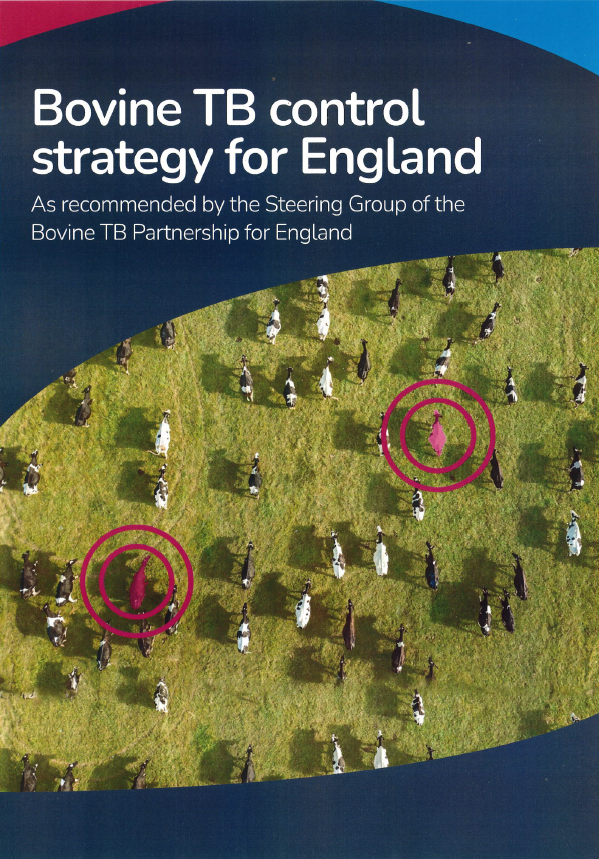
On 10th June 2026, Defra published its Bovine TB Partnership Steering Group’s; “Bovine TB control strategy for England“. Although the emphasis has now moved to bTB being a cattle disease, with the majority of transmission cattle-to-cattle, all the old scientific references to Randomised Badger Culling Trial (RBCT) based data and analyses and speculative whole genome seqencing estimates are still there. The old and now rejected ‘evidence’ of badger involvement falls away with the unpicking of the RBCT, yet Defra and hand-picked advisors simply won’t let go.
Government have many obstacles to overcome in their fight against entrenched bovine TB. Firstly, they need to reverse the fifty years of MAFF, then Defra indoctrination of farmers and farm vets to believe that badgers played a central role in the return of bovine TB in cows to epidemic levels, and in its current persistence. Secondly, that shooting, or injecting badgers with vaccine, holds any value to disease eradication in cattle. This is something that past governments have repeatedly and rather disgracefully misinformed the public about, even as new discoveries emerged (2). And here they go again.
For the last 30 years, ruinous and fruitless amounts of public money have been spent on research to try to prove that culling badgers is necessary, and on badger interventions that cannot be shown to have had any effect on cattle TB at all (3). This follows published evidence that any benefit is unmeasurable, which has been scorned or ignored by Defra, although they have been unable to substantiate their rebuttals (4). Successive government vets and researchers have tribalized (5) the badger-blame beliefs within civil servants, to the point that anyone raising doubts is considered weak and/or an animal rights activist. Finally, those who recognise the scientific uncertainty, and understand the statistical anomalies on research that they were once told was ‘settled science’, are not in charge. It is beyond their pay-grade to question group-think mentality and not within their power to do anything about it. Challenging it is a serious risk to their career.
Thus circumstances are weighted towards a policy impasse. To a point where despite Labour’s 2024 anti-badger cull manifesto philosophy that reflected up to date science, decision making is passed off as ‘political’. Officials at Defra purposefully persist in planning a future where badger culling and vaccination is required (6), using the oh-so-handy recommendation of the governments ‘Godfray panel’ strategy review update , published in September 2025 (7).
One problem Defra have, is that their bTB control review update was done by Sir Charles Godfray, who as a government advisor, was heavily involved with the now impugned Randomised Badger Culling Trial. This experiment was based upon an unrealistic trial design by Prof. John Krebs (8), that was taken forward in an incoherent manner due to circumstances and complex ‘people-factors’. The result was a hotly controversial methodology and controversial results. Godfray was there as the statistical analysis elements went pear-shaped. He failed to blow the whistle loud enough then, or in 2013 (9), when he told the world that he had reviewed the research, and it was all fine. This helped trigger badger culling, and his role in the 2018 policy review gave him the opportunity to repeat his views (10). Despite 50,000 people asking Oxford University to come to the table to discuss the statistical issues in 2024 (11), the entire Oxford academia, some of whom played a large part in the RBCT studies, refused to engage then or since.
Defra have come under fire over the 2025 review update panel appointments, but insist nothing was done wrong. Any ‘conflict of interest’ rested somewhere between panel members conscious (not only Godfray was conflicted), and the CoI rules of their institutions, that are often vague and set out to protect institutional reputations. Not surprisingly, Defra refuse to discuss this in a professional manner (or at all).
Irrespective of whether the government was looking to receive advice to fit its perceptions, the review as it stands goes to the heart of the matter. It was charged with considering the work of Veterinary Head at Zurich University, Professor Paul Torgerson and colleagues, who have systematically taken the RBCT statistics apart since 2019.
Prof Bernard Silverman, yet another ‘distinguished, esteemed, award winning, world-leading’ Oxford academic, (who substituted for Prof Christl Donnelly, of similar pedigree), was appointed to the 2025 Godfray panel review. Very unusually, he took it upon himself to do his own analysis of some of the RBCT data. This was perhaps designed to counter the rather devastating review of an attempt to rescue the RBCT analytics (12, 13) in 2024, which bounced off Torgerson’s paper published earlier that year.
Unfortunately, Silverman’s venture went suitably awry when, as FoI releases show (14) , over a lunch meeting to discuss the matter with a senior statistician friend, (someone who would later be called a ‘peer reviewer’), Silverman forgot to mention the crucial RBCT ‘time at risk’ data. This key variable was mysteriously separated from other other data and easily overlooked in the original analysis, that had actually implied that it had been used (15). In addition, he was perhaps not aware that the counting of often multiple repeat breakdowns of individual herds meant that that the binomial statistical approach (which Silverman used), was not appropriate.
The face value result of badger culling 1998-2025 was that as bTB prevalence rose in all areas, cull/no-cull comparison areas breakdown incidence went up or down in roughly equal measure after badger culling. This should have told everyone what they needed to know. One reviewer clarified that the RBCT was inconclusive research due to poor design.
This is important in the ongoing ‘to and fro’ battle in the Royal Society Open Science Journal to identify the most plausible veterinary and statistical approaches. Donnelly’s original Poisson regression approach was robustly demoted in 2025 by Scotland’s most senior biostatistician Prof Mark Brewer (16), who agreed with Torgerson (17). Donnelly et al. have still not replied to the important statistical issues in their work outlined in the Torgerson et el. 2024 and 2025 papers.
The inevitable consequence, is that the key 2006 (15) proactive culling conclusions are no longer valid as a credible experimental outcome. The so-called negative effect of culling (the disease perturbation effect) no longer has sufficient data to support it, and the positive effect is non-existent, despite some claiming a marginal benefit. But still, Nature Journal has not retracted the Donnelly et al paper, nor marked it with an expression of concern. Their reasoning seems to be that 2006 is a very long time ago, and that in time all papers have an element of error so is not worth amendment, and that Torgerson’s papers have exposed the problems anyway. Correction is therefore of no consequence.
Except of course Torgerson’s new analyses and the demotion of Donnelly’s, are of huge applied consequence. Godfray and Silverman have responded to corrections to their 2025 review update models with a claim that RBCT statistics are merely a matter of opinion and it should be reasonable to agree to differ. And anyway the RBCT is old science now, no longer relevant (18). Something the new strategy completely ignores when citing all the defunct government research. The 2025 review update claimed that other more recent studies confirm the involvement of badgers and a need for interventions. It is unclear whether they realise that a large part of the research and analysis work subsequent to the RBCT has relied heavily on the original analysis and that confirmation bias has played a huge part.
The ‘just walk away’ or ‘no comment’ tactic has not surprisingly been Defra’s preferred direction of travel since 2022. More recently Defra has seemed to shift from championing the RBCT as ‘world-leading settled science’, to addressing theorized ‘risk’. This approach, developed after 2016, has no measurable outcome. It is a philosophy with a might/might not work operational approach, all resting on the now flawed RBCT findings. It was designed to allow a future with unrestricted badger culling, controlled by the Chief Veterinary Officer, until July 2024 when the new Labour administration put a stop to it.
Managing risk might seem suitably sensible, unless of course the risk isn’t there (think Iraq War/weapons of mass destruction). Defra are trying to get out of a hole in their presentation to the agricultural sector and to Parliamentary scrutiny since the 1990’s, by saying there is still a risk that needs to be dealt with. Full confession of the truth, that badger blame is unevidenced, would result in major repercussions within the civil service, and would be devastating for so many at Oxford University.
There is an important legal point here. Culling of mostly healthy badgers was considered lawful when the RBCT was accepted, and done in the name of killing bTB infected badgers, and to stop the incorrectly assumed perturbation effect. Now that badgers cannot be shown to spread disease in the highly significant way that the RBCT claimed, and that the perturbation effect is just another unproven hypothesis (19), killing badgers cannot be said to be preventing the spread of disease. It is fake medicine.
Leaving the new strategy recommendations to its dubious bTB Steering Group allows Defra to change course later, and there are markers for a review to bring back badger culling in future. In fact, if a judge is ever asked to consider the recent fall of the RBCT science, and the failure to show intervention benefits since 2013, they might conclude that 250,000 badgers have already been killed for no good reason. Defra is clearly not ‘adapting and learning’ from 13 years of badger culling as it promised the High Court that it would, following a Judicial Review in 2018. Allowing more badger culling and even badger vaccination on the back of a perception of risk is – well – risky, and perhaps not lawful given the inability of government to show any efficacy of badger culling at all. And as the Godfray panel advice on willdife fails to stack up, any new policy to cull badgers fails too.
Only a handful of people have been able to follow the machinations of the scientific changes described above, and some are keeping quiet, having known or suspected much of it for some time. Including those involved and very close to the RBCT experiment.
Defra’s other push in recent years is a desperate struggle to find data to show badger vaccination has had some effect (20). This tail-chase began in defiance of the sinking RBCT ship; efforts to rope-in the NFU are unlikely to endure. NFU may continue to blame badgers and want them dead, as will their equivalents and farmers in other countries until government embraces the scientific change-over and acts accordingly. If they don’t, the issue may play out in the courts. While further £Billions per decade continue to be frittered by inappropriate disease control advice and measures, the correct approaches are sidelined by the unnecessary distraction of badger blame. The result of mistaken behaviour by scientists and vets for decades.
References
- Langton, Tom 2025. Cattle tuberculosis; badgers finally in the clear. British Wildlife Newsletter online 28.11.25.
https://www.britishwildlife.com/cattle-tuberculosis-badgers-finally-in-the-clear/ - PM Sunak contradicts his legal position on badger culling. Further Labour comments reported too.
https://thebadgercrowd.org/what-did-mr-sunak-say-about-the-badger-cull - Birch, C.P.D., Bakrania, M., Prosser, A. et al. Difference in differences analysis evaluates the effects of the badger control policy on bovine tuberculosis in England. Sci Rep 14, 4849 (2024). https://doi.org/10.1038/s41598-024-54062-4
- Defra finally back down and retract “abusive and offensive” 2022 media blog
https://thebadgercrowd.org/defra-finally-back-down-and-retract-outrageous-2022-blog - Defra ‘tribalism’ tries to undermine bTB study?
https://thebadgercrowd.org/what-defra-did-next - Will Defra advise Labour to U-turn and allow badger culling?
https://thebadgercrowd.org/will-defra-advise-labour-to-u-turn-and-allow-badger-culling - Godfray, C., Hewinson, G., Silverman, B., Winter, M. and Wood, J., 2025. Bovine TB strategy review update Department for Environment, Food and Rural Affairs https://www.gov.uk/government/publications/bovine-tuberculosis-godfray-evidence-review-update-2025.
https://www.gov.uk/government/publications/bovine-tuberculosis-godfray-evidence-review-update-2025 - Krebs, J. R., Anderson, R. A., Clutton-Brock, T., Morrison, I., Young, D., & Donnelly, C. (1997) Bovine tuberculosis in cattle and badgers. Report to the Rt. Hon Dr. Jack Cunningham MP. London: MAFF Publications.
- Godfray HC, Donnelly CA, Kao RR, Macdonald DW, McDonald RA, Petrokofsky G, Wood JL, Woodroffe R, Young DB, McLean AR. A restatement of the natural science evidence base relevant to the control of bovine tuberculosis in Great Britain. Proc Biol Sci. 2013 Aug 7;280(1768):20131634. doi: 10.1098/rspb.2013.1634. PMID: 23926157; PMCID: PMC3757986.
- Langton TES A bovine TB black-and-whitewash? The Ecologist 4 Dec 2018 https://theecologist.org/2018/dec/04/bovine-tb-black-and-whitewash
- https://www.oxonbadgergroup.org.uk/petitiondeliveredjuly24/
- Mills CL, Woodroffe R, Donnelly CA. 2024a An extensive re-evaluation of evidence and analyses of the Randomised Badger Culling Trial (RBCT) I:within proactive culling areas. R. Soc. Open Sci. 11, 240385. (doi:10.1098/rsos.240385)
- Mills CL, Woodroffe R, Donnelly CA. 2024b An extensive re-evaluation of evidence and analyses of the Randomised Badger Culling Trial II: in neighbouring areas. R. Soc. Open Sci. 11, 240386. (doi:10.1098/rsos.240386)
- Department of Environment Food and Rural Affairs 2025. Freedom of Information disclosure of Godfray et al. 2025 statistical model.
https://thebadgercrowd.org/wp-content/uploads/2026/06/Annex-C.pdf - Donnelly CA, Woodroffe R, Cox DR, Bourne FJ, Cheeseman CL, Clifton-Hadley RS, Wei G, Gettinby G, Gilks P, Jenkins H, Johnston WT, Le Fevre AM, McInerney JP, Morrison WI. 2006. Positive and negative effects of widespread badger culling on tuberculosis in cattle. Nature. 439(7078):843-6. doi: 10.1038/nature04454. Epub 2005 Dec 14. PMID: 16357869.
- Brewer 2025 Reviewer report for: Torgerson PR., Hartnack S, Rasmussen P, Lewis F, O’Donnell P and Langton TES. 2025. Randomised Badger Culling Trial—no effects of widespread badger culling on tuberculosis in cattle: comment on Mills, Woodroffe and Donnelly (2024a, 2024b)R. Soc. Open Sci. 26.03.25.
https://publons.com/wos-op/review/27191583/ - Torgerson PR., Hartnack S, Rasmussen P, Lewis F, O’Donnell P and Langton TES. 2025. Randomised Badger Culling Trial—no effects of widespread badger culling on tuberculosis in cattle: comment on Mills, Woodroffe and Donnelly (2024a, 2024b)R. Soc. Open Sci.12241609
http://doi.org/10.1098/rsos.241609 - Godfray HC, Hewinson G, Silverman B, et al. Response to Langton T. Questioning badger culling and vaccination. Vet Rec 2025;197:502 https://thebadgercrowd.org/wp-content/uploads/2026/02/Vet-Record-27Feb.pdfhttps://thebadgercrowd.org/wp-content/uploads/2026/02/Vet-Record-27Feb.pdf
- ‘Perturbation Effect Hypothesis’ for badgers and Bovine TB is now unevidenced. https://thebadgercrowd.org/bovine-tb-badger-perturbation-effect-hypothesis-no-longer-evidenced
- Same Link as ref 6:
https://thebadgercrowd.org/will-defra-advise-labour-to-u-turn-and-allow-badger-culling.
Discover more from The Badger Crowd - standing up for badgers
Subscribe to get the latest posts sent to your email.