Badger Vaccination:

There’s no evidence that it can work….
There are many government reports and a growing number of academic papers investigating the potential use of badger vaccination to attempt control over bovine TB infections in cattle. They mostly start from an outdated government premise that badgers are somehow a maintenance host, responsible for half or more of herd breakdowns. Scientifically there is acceptance of the lack of evidence for efficacy of badger vaccination as a method to reduce bovine TB incidents in cattle herds. There is just an assumption that if they were involved, reducing levels in badgers might aid bTB control.

Badger vaccination can be expected to reduce bTB in badgers, but………

Published analysis has for decades shown that, as expected, vaccinating badgers can reduce the prevalence of bTB in them (Aznar et al 2018, Benton et al 2020, Robertson et al 2025, Smith et al 2022). But without reliable information on how this relates to cattle bTB breakdowns, the huge cost of a highly intrusive wildlife intervention may be just another pointless waste and distraction to addressing the very well established and overdue shortfall in cattle testing and movement control – the problem that perpetuates the epidemic.

The government field trial ‘Vaccinating East Sussex Badgers’ (VESBA) scheme in Sussex study is coordinated by a commercial veterinary group. It has organised a badger vaccination project within a  250 km2  area, (see in APHA’s Year End Descriptive Epidemiology Report of Bovine TB in the Edge Area of England 2024, East Sussex). Latest reporting suggests that badger vaccination may reduce the prevalence of bTB in cattle, feeding the government narrative. But its a guess.

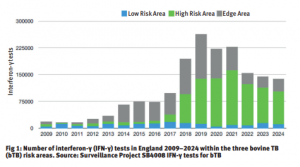
The messaging outputs from such studies, as with those from badger culling, are often not scientifically rigorous. They tend to originate from anecdotal comments by those involved expressing belief that some good is being done. In this case, because breakdowns reduced from 15 to 1 during a period from 2018. But this is the same period that the study area was subject to heavy Gamma interferon testing. The effects of vaccination are not separable from the enhanced cattle measures used in Sussex  – principally Gamma testing – that are being implemented simultaneously. This was the approach used by APHA to claim benefits from badger culling since 2013 in the ‘High Risk’, ‘Edge’ and ‘Low Risk’ areas, brought out like an old party trick to try to claim success, where none could be quantitatively shown.

Is the ‘placebo’ effect of telling farmers and vets that vaccination is (or is likely to) benefit cattle, the key to getting them to accept enhanced testing with its greater loss of stock to premature slaughter? This appears the philosophy behind badger vaccination (and culling previously). Even if such an approach is ethical, it cannot work due to the number of infections often left in the herd, even after gamma testing.

If badger culling has had no measurable impact on btb in cattle, neither will badger vaccination?

For badger vaccination to effect cattle herd breakdowns, badgers would need to be transmitting bTB to cattle in pastures at a relatively high frequency, and this has never been demonstrated. Nor has any plausible, evidenced transmission route been shown – the key element of basic epidemiology. Badger culling has also not been shown to have a measurable effect on rate of bTB herd breakdown. (See summary of the science here).

More recently, reference has been made to Whole Genome Sequencing (WGS) papers to make claims of transmission rates between and within cattle and badgers.

Study of the APHA epidemiology  reports for each county illustrates how WGS use for tracing in breakdown investigations cannot show  badger to cattle transmission. For investigations, WGS is only applied to identify clades. This is just a slight improvement on looking at spoligotypes. In practice, WGS for disease control leaves large uncertainty as to the source of tb in cattle, attributing badger as the default. If WGS was applied at finer resolution, and sufficient isolates were available, the data could clearly and unequivocally trace the source of disease back to the index case, at the individual level and in real time. But that isn’t being done.

The current disease report system does not take into account the incorrect assumptions made in APHA’s interpretation of WGS information. Every week, this leads to herds reinfecting themselves from ‘sleeper’ infections. With ‘badger blame’ used as a default cause by employing unscientific deductions. Published work explains different interpretations (Sandhu et al 2025).

Published journal  studies can only try to crudely estimate the frequency with which transmission occurs, nor the exact route or rate. Their capacity to show the route of transmission of pathogen between hosts is still in its relative infancy and requires intensive studies over many years. They are constrained by accuracy in controlling and sampling multi-host situations in varied commercial settings over relatively long periods of space and time. Study outcomes are dependent on choices made within complex models that are often not clearly identified or published, are speculative, and should be considered with utmost caution. Most papers since 2014 do flag this heavily but observers may try to quote them selectively. The results reported by WGS studies are not consistent, with differing conclusions.

Some of the WGS studies refer to and are parameterised with results from the still uncorrected  RBCT analyses in their modelling, which subsequent to successful challenge, should now be seen as scientifically unsupported. Many use the RBCT’s supposed benefit of badger culling as inference in introductions, discussions and conclusions and are now out of date.

The unpopularity of vaccination with …… well almost everybody

Since the 2020 Next Steps policy revision, Defra have begun slowly  to promote badger vaccination, investing in pilot schemes like VESBA and academic studies like “Investigations on attitudes towards bovine TB control: badger vaccination”, by Henry Grub of Imperial College, which strangely still remains undisclosed, with Defra claiming that they don’t have a copy.  Despite this, most stakeholders are opposed to, or at best, lukewarm about it. Farmers, who have been misled over the efficacy of badger culling and other interventions have very mixed views. A lot of work and expense would be involved if they were to adopt badger vaccination, with benefits unclear.

The British Veterinary Association and British Cattle Veterinary Association do not yet seem to have taken on board the new science surrounding ‘ineffective’ badger culling, and apparently have not revised their positions on interventions. Nature conservation organisations vary in their response to badger vaccination. Some Wildlife Trusts seem to support it in an off-hand way on the basis that it is a move away from culling and could help cattle, while some do not. The RSPCA supported it 5 years ago, but no longer seem to and the Badger Trust moved against it in 2024.

The putative benefits of badger culling (and by implication other badger interventions) have been undermined by new analyses over the last few years. It is a complex issue for everybody to access, (see here.) Smaller organisations especially, struggle to get a clear view on the science if they don’t have access to specialist scientific advisors. Whatever the views of the various stakeholders, badger vaccination leaves significant blame for disease transmission with badgers. That view is now scientifically unjustified.

The financial cost of badger vaccination

Badger vaccination is not a cheap option. The £1.4m badger vaccination trial underway in Cornwall is tiny relative to the landscape scale badger vaccination that it was suggested would be needed to vaccinate badgers in areas coming out of culling in the HRA. And the Junior Minister has confirmed it will not show if it can have an effect on cattle TB rates.

Defra have agreed a contract of £1.8 Mn for the supply of badger BCG vaccine for the next 5 years, and at least £18 Mn for its use over 4-6 years. They have ordered £200,000 of Badger BCG for 2026 from the manufacturer AJ Vaccines in Denmark (Defra FOI). With estimates for the cost of one badger BCG dose at around £33, the aim seems to be to vaccinate around 6,000 badgers. This will increase the number of badgers vaccinated above and beyond that vaccinated in small schemes in, for example nature reserves, which has been by about 25%: from around 3,000 to 4,000 badgers. The result amounts to ‘vaccination lite’ – a tokenistic approach that reflects the scientific lack of confidence in it having any value, (see Farmer Weekly).

The vaccine cost is of course only part of the spend; labour, traps and other associated costs can bump up the price to several hundred pounds per badger. One abandoned Welsh government program in 2015 estimated its costs at over £800 per badger and the maths suggests the new vaccination costs will be similar.

The practical challenges of vaccinating large number of badgers over a large area

The logistics of a vaccination project over a large area looks daunting. Vaccinators need to be trained. Sett locations and access for cage placement and pre-baiting need to be well understood. Permissions for access need to be managed. This will incur further cost. It remains to be seen whether this is feasible within an already sceptical industry, and with volunteers luke-warm at best, about getting dragged-in.

Ethical consideration of interfering in a population of wild animals

Then there is the question of the ethics of interfering with a wild animal population without good reason. Badgers, while susceptible to bovine TB, are relatively resilient to it and may carry several strains around. Their life expectancy is sufficiently short that they are unlikely to die from infection. Despite wild claims, including those in published literature, they have not been shown to be a ‘self-sustaining’ or a maintenance reservoir for bTB infection. It is likely to fade down and out once cattle are clear – in a similar way to that seen in possums in New Zealand. Without re-infection from cattle, it is likely that the disease would die down naturally. Benefits to the badger population from vaccination are unknown, but could be improved health and improve fecundity.

Just not necessary…….

Recent re-analyses (here and here) of badger culling trials have shown that there is no proof of any benefit to cattle from badger culling, and measurable benefit from badger vaccination is unlikely too.  From the evidence, it is not justifiable to embark on a hugely expensive and intrusive badger vaccination programme, the benefits of which are dubious, and  according to past approaches, unquantifiable. It is just more squandering of public funds when the failings of the current cattle testing system remain poorly addressed, yet are so plain to see.

References

Aznar I, Frankena K, More SJ, O’Keeffe J, McGrath G, De Jong MC. Quantification of Mycobacterium bovis transmission in a badger vaccine field trial. Preventive veterinary medicine. 2018 Jan 1;149:29-37.

Benton CH, Phoenix J, Smith FA, Robertson A, McDonald RA, Wilson G, Delahay RJ. Badger vaccination in England: Progress, operational effectiveness and participant motivations. People and Nature. 2020 Sep;2(3):761-75.

Langton, Tom, 2021. Where is the March 2020 ‘Next Steps’ policy trying to take us?, YouTube video of Voices for Badgers

Langton, Tom, 2025. Cattle tuberculosis; badgers finally in the clear. British Wildlife Newsletter online 28.11.25.

Robertson A, Chambers MA, Smith GC, Delahay RJ, Mcdonald RA, Brotherton PN. Can badger vaccination contribute to bovine TB control? A narrative review of the evidence. Preventive Veterinary Medicine. 2025 May 1;238:106464.

Sandhu P, Nunez-Garcia J, Berg S, Wheeler J, Dale J, Upton P, Gibbens J, Hewinson RG, Downs SH, Ellis RJ, Palkopoulou E. Enhanced analysis of the genomic diversity of Mycobacterium bovis in Great Britain to aid control of bovine tuberculosis. Front Microbiol. 2025 Mar 25;16:1515906. doi: 10.3389/fmicb.2025.1515906. PMID: 40201440; PMCID: PMC11975571.
Smith GC, Barber A, Breslin P, Birch C, Chambers M, Dave D, Hogarth P, Gormley E, Lesellier S, Balseiro A, Budgey R. Simulating partial vaccine protection: BCG in badgers. Preventive Veterinary Medicine. 2022 Jul 1;204:105635.

Bringing the science of badger culling up to date

The original Randomised Badger Culling Trial (RBCT) analysis

The Government’s English badger cull policy since 2011 has rested all but entirely on the RBCT analyses, the first of which was Donnelly et al (2006). It is the science that DEFRA has used to create intensive, supplementary and Low Risk Area (LRA) policy and in court to defend their decisions to ‘experiment’ with badger culling. The claim from this work was that badger culling along similar lines can reduce bovine TB cattle herd breakdowns by around 16% per year; dozens of subsequent studies used in policy and to inform economic and operational models  on which the badger cull policy hangs, were heavily derived from and dependent on the RBCT and most of these remain in place in 2025.

A challenge to the RBCT analysis

First preprinted in December 2022, a comprehensive re-evaluation of the RBCT was published in July 2024 in Nature Scientific Reports (Torgerson et al 2024). The new study re-examined data from the RBCT proactive culling experiment, using the most epidemiologically appropriate range of statistical models, in accordance with the experiments design. It concluded that most standard analytical options show no evidence to support an effect of badger culling on bovine TB in cattle. The statistical model selected for use in the original study in 2006 was one of the few models that did show an effect from badger culling. However, various criteria suggest that the original model was not an optimal model compared to other analytical options then available; the most likely explanation for the claimed culling benefit was that the chosen model ‘overfitted’ the data and used a non-standard method to control for disease exposure. This gave the model a poor predictive value, i.e. it was not useful in predicting the results of badger culling. The more appropriate models in the Torgerson study strongly suggest that badger culling did not bring about the disease reduction reported. Further, inclusion of ‘all reactors’ to the tuberculin test showed no effect of culling irrespective of the model used.
Shortly after, on 21st August  2024, and as a response to Torgerson et al 2024, two of the authors of the original analysis of the RBCT from 2006 (together with a third student author) published two new papers in the Royal Society Open Science journal (Mills et al 2024a&b) using large amounts of the Torgerson preprinted models and doubling down on their original conclusions saying they were ‘robust’. On 16th September 2024, a ‘Comment’ response to the new Mills et al. 2024 papers was submitted to the RSOS: “Randomised Badger Culling Trial—no effects of widespread badger culling on tuberculosis in cattle: comment on Mills, Woodroffe and Donnelly (2024a, 2024b), (Torgerson et al 2025). After a delay of eight months, this was accepted (with minor modifications) on April 23rd 2025 and published on 11 June. This new publication further exposed the flaws of the original RBCT analyses and the more recent attempt to defend it (Donnelly et al 2006 and Mills et al 2024a&b). The findings were endorsed by a senior biostatistician who described key aspects of analytical choices in Mills et al. and the 2006 paper as “naive at best” (Brewer 2025). A letter in Vet Record from October (Torgerson 2025) states that “A request has been sent to retract the 2006 RBCT proactive culling paper, as the results have been shown to be untenable. In my view papers published since 2006 that are reliant on the veracity of the RBCT analysis and results also need to be corrected or retracted.

The latest Godfray review update of the science of bovine TB (Godfray et al 2025) published in September 2025 agreed that the Torgerson et al. 2024 analysis is the more ’natural’ way to analyse the RBCT data, but beyond its brief to review scientific material published since 2018, decided to undertake its own analysis. This used a binomial rather than Poisson approach to conclude a badger culling benefit from the RBCT data, but at a much lower level of significance than previously presented – it was transformed from ‘weak’ not ‘strong’. Thus agreeing with Torgerson and destroying evidence for the perturbation effect hypothesis.

However, the Godfray/Silverman RBCT model in the review update has additional flaws, and it is not based on the complete data set; it did not include the important ‘time at risk’ variable.  As a result, its binomial model follows a similar pathway as the 2006 analysis. When time at risk is included with the appropriate adjustments, the results suggest no effect of culling. In reality the Godfray/Silverman work pulls down the Donnelly 2006 analysis and then itself, completely undermining the RBCT and a vast volume of subsequent science and policy based upon it. A preprint outlining the various problems with the new model was posted in October 2025 (Torgerson 2025).

Godfray’s review update concluded that the RBCT now provides “limited (if any) insights into the design and likely value of including culling in a control programme”, despite the basis and inference it provides for a large number of later studies, including whole genome sequencing (WGS), which it now looks to for “valuable new information about the risk of infection from badgers”. The huge importance of the loss of Donnelly et al (2006) and its associated papers as plausible science is not mentioned.

APHA analysis of the industry-led badger culls

Brunton et al (2017) and Downs et al (2019) analysed data from the first two, and then up to four years of culling respectively, but for only 2 and 3 cull areas respectively. Large benefits from culling were claimed, but neither had sufficient data to draw robust conclusions and both were heavily caveated. Both repeated the statistical flaws of the Donnelly et al. 2006 analysis and Donnelly was a co-author. These papers too are now invalidated by the recent appraisals.

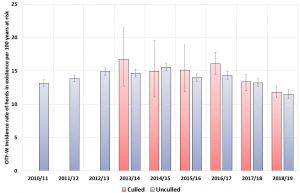
In March 2022, a new study (Langton et al 2022) in Veterinary Record journal, looked at data from the first six years of badger culling. Firstly, it looked at herd breakdown incidence and prevalence of cattle bTB in areas that had undergone a badger cull and compared them with the data from areas that had not had culling. This was done over a seven-year period 2013-2019, so before and after culling was rolled out in 2016; hence it was a study of the first three years of culling. Multiple statistical models checked the data on herd breakdowns over time and failed to find any association between badger culling and either the rate of incidence or prevalence of bovine TB in cattle herds.

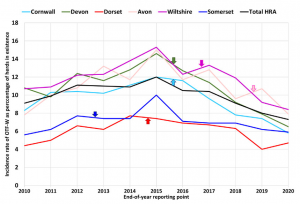
Secondly, the 2022 paper looked at the trends over time of disease rates for the same period. Data suggests that the cattle-based testing and movement control measures, including annual tuberculin testing from 2010, were most likely responsible for the slowing, levelling, peaking and decrease in bovine TB in cattle in the High Risk Area (HRA) of England during the study period, in most areas well before badger culling was rolled out.
Despite being rigorously peer-reviewed (by 4 peer-reviewers, including Vet Records in-house statistician), the paper and its authors were attacked by Defra in the media and on their blog, and its findings were not accepted. The Chief Veterinary Officer and Defra’s Chief Scientific Advisor published a rebuttal letter alongside Langton et al, claiming their data showed that badger culling was working. Six weeks later Defra admitted that their data was wrong and published a new graph of data. They maintained, however, that this did not change their overall conclusions about the new paper, and did not respond to the rebuttal arguments that the authors put forward in the 2nd April 2022 issue of the journal Veterinary Record. Criticisms by government suggested that greater declines had happened in culled areas, but the confidence intervals were too large to show any clear effect. No analysis was offered by Defra to back up the claim who attacked the papers authors, the peer reviewers and the journal. Subsequent ‘Freedom of Information’ requests released emails showing that Defra had sought to block the paper after it had been accepted.

No further comment was made from Defra until (at the Request of Godfray/Silverman) the posting of a preprint, Robertson (2025), that used the disputed analyses (from Donnelly 2006 & Birch 2024 see below) to generate data simulations, to claim that Langton et al may not have detected a disease benefit if one had existed. This used a lower estimated change of 2.8% reported in the first years of culling by RBCT model outputs, rather than the substantial claimed benefits in the more recent APHA papers. The arguments put forward by Robertson are addressed in a brief preprint by Langton (2025) demonstrating that a normal approach to checking data variation shows the Robertson claims are highly likely to be spurious.

The February 2024 paper by Defra staff (Birch et al.) was used to justify further culling proposals in the March 2024 Defra ‘targeted culling’ consultation, and implied, using convoluted wording and without any evidence, that the culling programme thus far had been successful. This was repeated heavily by the Minister and trade press, creating a mass mis-information process that was countered by the incoming Labour government that called culling ‘ineffective’. Authors of Birch twice acknowledge (on careful reading) that while they may speculate, the overall changes in disease levels cannot be attributed to badger culling: all disease measures implemented, including new additional and extensive testing, were analysed together with no control. Claims of badger cull benefit from this analysis are further undermined by its under-declaration of the use of Gamma interferon testing; Birch claims this wasn’t being carried out during the first two years of culling, but government data suggests otherwise (see here and here). There was no comparison of culled and unculled areas, despite the Godfray review update suggesting that there was. Birch cannot attribute recorded benefit to badger culling and provides no insight at all.

Writing in a preamble to Badger Trust’s report ‘Tackling Bovine TB Together’, key badger ecologist and original RBCT scientist Professor David Macdonald writes that the authors of Birch “… do not claim to have measured the consequences of badger culling, and indeed they have not”, and, “there is still no clearcut answer regarding the impact of this approach to badger culling on controlling bTB in cattle or, more broadly, whether it’s worth it.”

A flawed method to identify the source of infection

Badger culls have previously been justified using the guess-based ‘Risk Pathways’ approach of the Animal Plant and Health Agency (APHA). This system sees farm vets invited to speculate on the likely origin of infection. If they are unable to link it to a previous cattle infection (they only look back four years), they often tick the box that blames an environmental source, by default badgers. No evidence is required. However, a study in TB-Free Switzerland of a single-source new outbreak found suggested persistence of bovine TB in a dairy herd for nearly fifteen years without detection (Ghielmetti et al 2017). Further, it is now accepted that the standard SICCT test, at standard interpretation, has an average herd sensitivity of around 50%, thus missing up to half of infected herds and several infected animals per herd; hence disease is remaining undetected in around 20% of herds. The lack of scientific evidence supporting the APHA approach in the Low Risk Areas to identifying the source of disease is discussed in the independent report Griffiths et al (2023).

A new way to blame badgers – Whole Genome Sequencing (WGS)

The Godfray review update (2025) strongly endorses the use of WGS, saying; “…recently introduced  techniques, especially WGS, have provided valuable new information about the risk of infection  from badgers, consistent with, but significantly extending, the original inference from the RBCT that badgers do present some risk to cattle”.

However, this is a broad and unqualified statement . While WGS studies (there are  around nineteen of them) generally report some evidence that a particular strain has been found, time-dated, in a sampled badger and a sampled cow, they do not accurately report the frequency with which transmission occurred, nor the exact route, which may even be via another organism. WGS’s capacity to deliver conclusive findings in the exact route of transfer of pathogens between hosts is still in its infancy and constrained by accuracy in controlling and sampling multi-host situations in varied commercial settings over relatively long periods of space and time. Outcomes are dependent on choices made within complex models that are often not published, are speculative and should be considered with utmost caution. The results reported by WGS studies are not consistent; conclusions reported differ widely. The Godfray review update listed some of the findings but did not do any critical evaluation of them; this remains absent. There is a risk that the Godfray review may repeat the same failings as the Godfray restatement of RBCT findings in 2013, published by the Royal Society,  by not checking the veracity of publications.

Some of the WGS studies have used results from the original RBCT analyses in their modelling, which subsequent to successful challenge, should now be seen as scientifically unsupported. Many use the RBCT’s inference of the supposed benefit of badger culling as inference of a likely transmission route from badger to cow and likewise are now unsound.

Are ‘unconfirmed’ reactors infected with bovine TB?

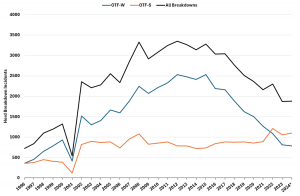
The Godfray review in 2025 was charged with ruling on the matter of whether cattle which react to a lesser extent to the SICCT test, but where they pass subsequent tests should be categorised as infected. This distinction is of great significance because when ‘all’ data (confirmed and unconfirmed) are included in the RBCT analyses, no badger culling benefit is found (in Donnelly et al 2006 or Torgerson et al 2024). Also, because until recently, stock known to be infected (Officially Btb-Free Suspended (OTF-S)) could be kept in the herd and traded in England.

Importantly, APHA epidemiological monitoring of bTB incidence currently focusses on confirmed reactor data (Officially BTB-Free Withdrawn (OTFW)) to report on the progress of disease control. Inclusion of unconfirmed animals in the data (prevalence) indicates that the disease remains largely unchanged after 12 years of Badger Control Policy (BCP) (Langton and Torgerson 2025). An explainer for the jargon around this issue is available here.
The Godfray update did not determine this issue however, saying only; “Detailed research is needed to allow these questions to be addressed systematically in ways that achieve a  consensus among the various stakeholders.

Policy implications for badger culling are considered here.

BTB control contradictions at the APHA

In late November 2025 APHA published online their annual report on bTB for last year: “Bovine tuberculosis in England in 2024 Epidemiological analysis of the 2024 surveillance data and historical trends in cattle.” It is a disappointing read.

In 2023, APHA said:

A new Disease Report Form (DRF), for recording cattle TB incident investigations, is under development. This aims to enhance data capture and review the methodology around how we assess source attribution to improve understanding of TB transmission pathways and the evidence base for biosecurity advice.”

But in their latest report, APHA are once again using the tired, outdated and discredited veterinary ‘risk pathways’ approach (see chapter 2 of this 2023 report.). It has still not been properly revised, and is being used again to speculate about the source of new infections. As a result, APHA continue to point ‘by default’ to badgers. They do this by ignoring the thousands of undisclosed infections from breakdown herds incorrectly declared bTB-Free each year due to the flawed testing regime that they have imposed on farmers for decades. These herds get rid of higher risk animals to other farms and at auction for years after they have been suspended following the identification of reactors. The APHA are very well aware of this.

This undetected disease in the herd continues to be overlooked for reasons that remain unclear. Perhaps one reason for the apparent intransigence to this overwhelming problem is that disruption to the industry supply-lines are limited, but the result is that the epidemic continues across England.

Let us remind ourselves that this ‘risk pathways’ system is based on a tick-based form that is completed by farm vets, who when invited to speculate on the likely origin of infection, and seem unable to link it to a previous cattle infection, possibly due to lack of information – just tick the box that blames badgers. No evidence required and the farmer is reassured it’s not their purchasing that has led to a breakdown. But……………..

Cattle testing is missing us to half of infected animals

  • It is now accepted that the standard SICCT test, at standard interpretation, has a low average sensitivity of around 50%, thus missing up to half of infected animals. Some would say lower.
Standard SICCT test, at standard interpretation, has a low average sensitivity of around 50%
  • Government’s external vet of choice, Cambridge University’s James Wood claimed on BBC Radio 4’s Farming Today earlier this year that: “The challenge is with this [testing] system, the controls are imperfect, so that when we clear a farm with TB we know that a proportion that maybe as high as 25 or 50%, a proportion will have one or two animals that are still likely to be infected.“
  • A study in Switzerland found suggested persistence of bovine TB in a dairy herd for nearly fifteen years without detection.
  • New studies have been testing bulk milk tanks on farms for bTB  antibodies using Enferplex testing (1,2) essentially doing a whole-farm bTB test in one go, indicating  that up to 40% of dairy herds have bTB infection.

Let’s blame badgers anyway

These shocking facts make a nonsense of the new APHA report and the ridiculous levels of badger transmission suggested. It is just so confused and contradictory. It states that  over half of new TB incidents occurring in 2024 in England, and nearly 60% of those in the HRA, were disclosed in herds that had experienced a TB incident in the preceding 3 years (recurrent herd incidents). These are herds that will be selling out infected surplus stock on a routine basis. Therefore, recurrent infection of cattle herds remains an important driver of the epidemic in these risk areas (Table1.1).

But at the same time it claims that the main risk pathway identified across all HRA counties during veterinary investigations was via potential exposure to infected badgers, which supposedly accounted for a weighted contribution of between 37.1% (Devon) and 67.2% (Shropshire).  So over half of new incidents are in herds that previously had TB (and this doesn’t account for disease from brought-in stock), but at the same time up to around one to two thirds are blamed on badgers. And it actually contends with pure guesswork, that “Recurrent herd incidents can occur due to a number of factors which includes residual infection, exposure to infected wildlife, poor biosecurity and high risk trading practices, amongst others” when it knows a large majority is infection breaking out again from within herds where it has been present all along.

This is veterinary nonsense and it just has to be queried who is in charge. Why do the APHA want to keep reporting such speculative claims? The most obvious reason is that bTB is totally beyond the current control system. Surely they cannot believe that it is anything other than the daily sale of inadequately tested stock that maintains the disease. Stock that in Wales, it is now unlawful to sell. Whatever happened to risk-based trading? Why does APHA hide the reality that newly OTF breakdown herd stock are massively risky?

And there is no acknowledgement of recently published science that shows that culling badgers during the Randomised Badger Culling Trials,(see here and here) and during the industry led culls (here) since 2013 cannot be shown to have resulted in any disease benefit. The central evidence for badgers being a significant source of infection is now absent. So why this continuing fixation with trying to blame badgers? Is the problem just too big for anyone to take responsibility? Why did they throw the most experienced cattle vet off the BTB partnership for exposing why the current testing system has failed in dairy herds?  

APHA are an organization that appear frozen in their capacity to change, despite the growing evidence of systems failure. This is a report for 2024 and there is nothing to suggest this year will be any different. APHA surround themselves with those who want to blame and kill or interfere with badgers, often it might seem just to hide their past oversights. When their badger policy since 2013 is an epidemiological mistake of epic proportions, heaping prolonged misery and suffering on cows, farmers and badgers at public expense and with no end in sight.

Additional References

(1) Hayton, A. (2025) Can Bulk Milk Revolutionise TB testing? A study to examine the contribution of bulk milk testing to bovine tuberculosis(bTB) surveillance and control in Great Britain. British cattle Veterinary Association Congress, Edinburgh 9-11 Oct. 2025.

(2) Hayton, A., Watson, E. and Banos, G. (2023), Bulk milk testing for bTB surveillance. Veterinary Record, 192: 85-85. https://doi.org/10.1002/vetr.2670


Infectiousness of cattle – how Bovine TB understanding went wrong in the 1980s

Back in the day, and well before their ‘not-so-sensible after all’ 2001 merger  with the Department of Environment, Transport and the Regions (DETR),  the Ministry of Agriculture, Fisheries and Food, (MAFF), were influential in deciding what government should do about badgers.

Badgers  had being shown to be carriers of bTB, and capable of infecting cows, at least when locked in a small shed together with them for months. In their contribution to the 1980 Government review, (and tucked away in a long appendix), MAFF made significant claims that went wildly against the established veterinary thinking of previous decades. Previous established understandings had led to the effective elimination of the disease across most of Britain, no less. 

Despite this, in 1980 MAFF determined (on pure supposition) that badgers were heavily involved in disease transmission, via a (what now seem far-fetched) theory that ‘Cattle TB’ was in fact ‘Badger TB’, because infected cattle were rarely infectious. This was, they wrongly guessed, because  large lung lesions in cattle were mostly ‘closed’. Read our blog “How on earth did badgers get the TB blame?” and the more detailed report “Fifty years (1975-2025) of changing perspectives on bovine tuberculosis infection in cattle and badgers” for more information.

In the video linked below, ecological consultant Tom Langton shows how bad epidemiology altered the course of bTB control, sending scientists, civil servants, politicians, farmers and vets floundering  in the wrong scientific direction for over four decades.

APHA’s Edge Area Bovine TB Epidemiology Reports for 2023

How’s it going?


The quotes in the table below are taken from the APHA county epidemiology reports recently released. Progress is clearly not on target. As seen in Oxfordshire (see here), bTB in the Edge Area is not being addressed with sufficient resources or the right approaches. The lack of adequate testing is so glaringly obvious it is beyond belief that this situation is being allowed to continue. The bovine TB eradication policy is in tatters not just in the HRA and LRA but in the Edge Area too.


County

Progress

Going Well?

Berkshire

“Looking at the recent trend, the likelihood of achieving a herd prevalence of less than 1% OTF-W incidents in Berkshire by 2025 is low.”

No

Buckinghamshire

No prediction

?

Cheshire

“..the prevalence (4.4%) in 2023increased marginally compared to 2022. OTF county status will not be achieved by 2025,but with the use of all available tools to identify and to reduce the burden of infection, it might be possible to achieve OTF status by 2038.”

No

Derbyshire

“Based on current information, achieving OTF status is not conceivable for Derbyshire by 2025. Residual infection continues to be a problem in Derbyshire. The reasons for this are unclear, may be multi-factorial, and is likely to include herd type, wildlife populations, farming practices and proximity to the HRA county of Staffordshire.”

No

East Sussex

“The increase of prevalence rate from 2022 in addition to the geographical extension of the endemic area (HRA prior to 1 January 2018) suggests that East Sussex will not be able to achieve OTF status by 2025. The prevalence and incidence will need to have a considerable reduction through the next 10 years to ensure that OTF status in the county could be reached by 2038.”

No

Hampshire

“The likelihood of achieving a herd prevalence of less than 1% OTF-W incidents in the county by 2025 is low.”

No

Leicestershire

“Although the herd incidence declined again in 2023, it is unlikely that Leicestershire will achieve OTF status by 2025.”

No

Northamptonshire

“Despite the declining herd incidence and prevalence trends over the last 3 years in Northamptonshire, it seems unlikely that the county will be eligible for OTF status by 2038.”

No

Nottinghamshire

“Additionally, prevalence in Nottinghamshire at the end of the reporting year was 1.7%. It seems unlikely for Nottinghamshire to become eligible for OTF status by 2025, as set out in the strategy for achieving OTF status for England, published in 2014. However, if the disease trend continues to decline as a result of effective disease control measures it is possible Nottinghamshire will achieve OTF status by 2038.”

No

Warwickshire

“Official-TB-Free status (OTF) for Warwickshire will not be achieved by 2025, as set out in the ‘Strategy for Achieving OTF Status for England’, published in 2014. However, progress is being made and the outlook is positive.”

No


Recurrence

Recurrence’ is where bovine TB returns to a herd after a period when it has not been detected by periodic testing. Recurrence is the result of residual infection, ineffective testing and cattle movements, (with the odd unevidenced nod to wildlife). Recurrence is now recorded consistently across the Edge Area and the High Risk Area, and it is the reason why the Edge Area is unlikely to be TB free by 2038. APHA diverted gamma testing in 2021 to herds with a history of recurrence and persistence, at the same time reducing parallel testing of gamma alongside the skin test in OFT-W (Officially TB Free Withdrawn) herds, resulting in early undetected disease remaining in herds throughout the Edge Area.

It’s interesting to note that ‘Overall Recurrence’, ie recurrence during the herd’s lifetime, has been added to the recently published epidemiology reports (see below). Previously, recurrence has only related to the previous 3 years.  ‘Overall Recurrence’ reflects the true seriousness of the epidemic. 

And alongside the reality of the problem of Recurrence, the APHA are still blaming badgers for significant disease transmission without evidence, and still claiming disease benefit from badger culling without evidence.