
 A new epidemiological report compares the scientific data on bovine TB herd breakdown in Wales and England over the last two decades. It evaluates outcomes, and looks for any sign that badger culling has had any effect. A summary of its contents is given below. You can read the full report here.
Introduction
The role of badgers in cattle TB, and whether interventions targeting them reduce disease, remains evidentially uncertain. Long-term data from England, where culling has been implemented, and Wales, where it has not, provide a large scale insight. Welsh Government data show a similar trajectory to England, with one measure of herd incidence steadily falling from its peak about a decade ago.
Testing and Surveillance
England increased cattle testing frequency in its High Risk Area, with six-monthly testing from 2022. The Welsh Government proposed 6-monthly testing for its High Risk Areas during consultation for a ‘Refreshed TB Eradication Programme’ (2016-2017). However, this was rejected due to industry objections to the financial and physical burden it would bring to cattle farmers.
Herd Incidence and Prevalence
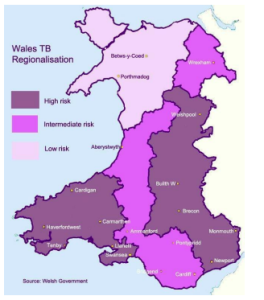
Both countries had around 6% herd breakdown incidence to-March 2026, showing similar progress since 2005. Herd prevalence in high-risk areas declined, but with a recent temporary spike in Wales that is now under control. Wales’s High-risk West area remains a significant challenge due to persistently infected, large sized herds.
Badger Interventions and Scientific Evidence
England’s intensive badger culling from 2016 was based on weak evidence that is now considered to be inconclusive. Enhanced cattle testing (gamma interferon, IDEXX) detects more infected animals than before, but cannot find all. Genomic studies show cattle and badgers share bTB strains, but transmission direction and significance are uncertain due to the need for prolonged and detailed sampling. Scientific analyses of historic research and of data from industry culls in England point to badger culling being ineffective and not a credible bovine TB control intervention. .
Conclusions
BTB data for England and Wales is remarkably similar over the years. Progress in Wales slowed after 2021, mainly due to known specific issues in its high-prevalence TB areas. More targeted cattle control measures and increased testing are needed there to match effort in England. Evidence indicates cattle-focused strategies, not badger culling, are effective for TB control. The data supports Wales’s approach to-date as scientifically justified, with no benefit from badger culling being apparent in the extensive data collected in England.
Summary
The comparison between Wales and England shows similar reductions in herd incidence, despite more intensive testing and badger culling in England. Scientific evidence does not support the efficacy of badger culling, but strongly suggests that the application of cattle measures has positive control effects. Ongoing impartial data analysis is vital for adapting policy and achieving eradication goals. Much of the existing badger literature is out of date and strongly misleading. In following science and evidence, great care is needed to identify obsolete conclusions resulting from the re-use of historically flawed analysis.
Discover more from The Badger Crowd - standing up for badgers
Subscribe to get the latest posts sent to your email.